Weather Resistant Prefab Homes Canada
- StratCan Building Systems
- Mar 24
- 6 min read

A house in Canada does not get judged on curb appeal alone. It gets judged in freeze-thaw cycles, wind-driven rain, deep snow loads, coastal moisture, and long heating seasons. That is why demand for weather resistant prefab homes Canada buyers can rely on keeps growing. The right factory-built home is not just about speed. It is about getting a structure engineered, assembled, and delivered with the climate in mind from the start.
What weather resistance really means in prefab housing
Weather resistance is often reduced to a few sales terms like better insulation or tighter construction. In practice, it is broader than that. A weather-resistant prefab home needs a strong structural shell, effective moisture control, dependable thermal performance, and components selected for the region where the home will sit.
In Canada, climate demands change by province, by elevation, and even by distance from the coast. A home built for a mild inland location may need different roof loading, cladding details, window specifications, and ventilation planning than one delivered to a windy or high-moisture site. That is one of the main advantages of prefab when it is done correctly. The design can be matched to site conditions before production begins, rather than improvised during an exposed on-site build.
Factory-built does not automatically mean weather-ready, though. The quality of the manufacturing partner, the certification process, and the engineering behind the home matter far more than the label itself.
Why factory-built homes perform well in Canadian weather
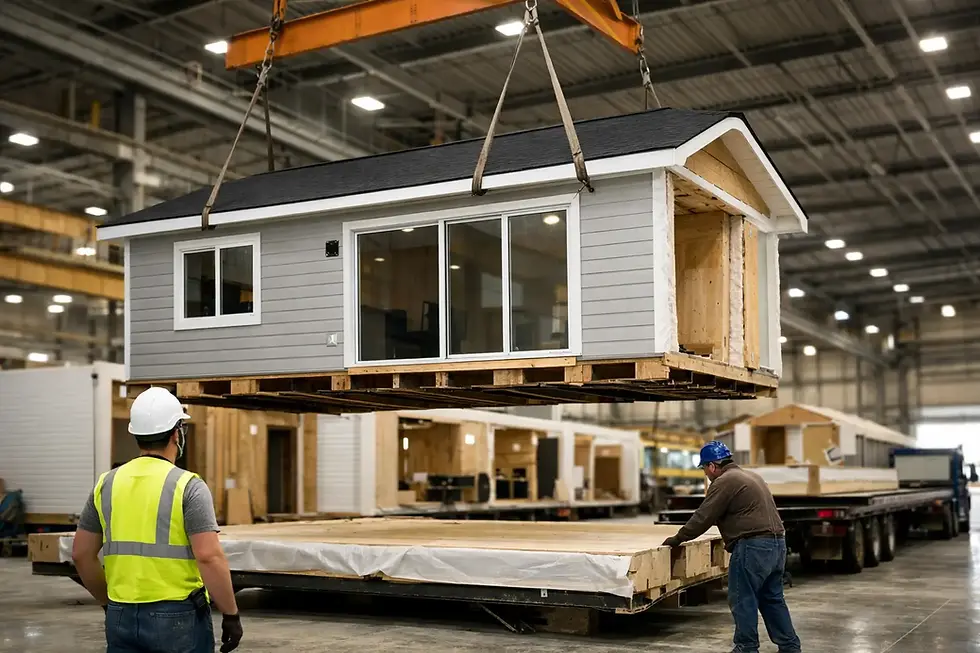
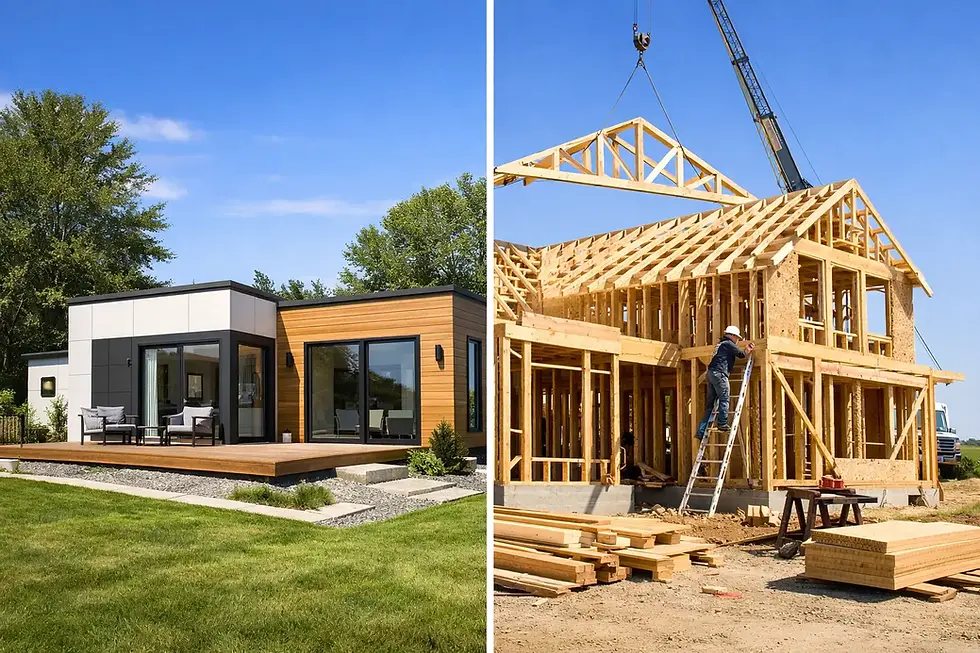
A site-built house often spends weeks or months exposed during framing and enclosure. Rain, snow, and moisture can affect materials before the building is even dried in. A prefab home is built in a controlled environment, which reduces that risk and allows tighter quality control through each production stage.
That controlled setting supports better consistency in framing, insulation installation, air sealing, and window placement. Those details matter. Small gaps in the building envelope can lead to air leakage, heat loss, condensation, and long-term durability issues.
The other major advantage is repeatable process. When production follows documented standards, with inspection and certification built into the workflow, buyers get fewer field variables. That is especially valuable for homeowners and landowners who want a predictable path on pricing, financing, delivery, and final setup.
Key features in weather resistant prefab homes Canada buyers should look for
If you are comparing options, focus less on broad claims and more on how the home is designed and certified.
Structural engineering for wind and snow loads
Canadian weather puts real pressure on roofs, wall systems, and connections. Snow accumulation can be substantial, and wind exposure is a serious issue in many rural and coastal areas. The home should be engineered for the applicable loads in the destination region, not built to a generic baseline.
Roof design matters here. A lower-cost design that works in one market may not be the right fit where snow loads are higher or where drifting is common. The same goes for wall bracing, truss design, and fastening methods. Ask how the structure is engineered for local code requirements and site conditions.
Strong insulation and air sealing
Insulation levels are only part of the story. A home can have decent insulation values on paper and still underperform if the air barrier is weak. Good thermal performance depends on both. In colder climates, air leakage increases heating costs and can create uncomfortable drafts and condensation around problem areas.
Factory-built homes often have an advantage because insulation and sealing can be installed under better conditions with more consistent oversight. Even so, buyers should still ask what wall, roof, and floor assemblies are used, and how thermal bridging and air leakage are addressed.
Moisture management and ventilation
Moisture is one of the biggest long-term threats to housing performance. That risk comes from outside and inside. Rain, humidity, melting snow, and vapor generated through daily living all need to be managed properly.
A weather-resistant home should include a well-designed building envelope and a ventilation strategy suited to tighter construction. If the home is built to reduce air leakage, it also needs controlled ventilation to maintain indoor air quality and reduce condensation risk. This is not an upgrade to treat lightly. It is part of durable home performance.
Durable exterior materials
Siding, roofing, windows, doors, sealants, and flashing details all affect how the home handles weather over time. The right exterior finish depends on the environment. A material that performs well in a dry region may need more maintenance in coastal or storm-prone locations.
Durability should be evaluated along with serviceability. Buyers should think about replacement cycles, maintenance needs, and how products hold up against salt air, wind exposure, and seasonal movement. Lowest initial cost is not always the best value if exterior components need early replacement.
Certification and code compliance are not optional
For many buyers, the most practical filter is certification. CSA-certified factory-built homes give a clearer path on code compliance, inspections, financing, and insurance acceptance. That matters because weather resistance is not just a comfort issue. It is tied directly to structural safety and long-term asset value.
Certification also helps separate engineered systems from improvised builds. When a home is manufactured under recognized standards, buyers have more confidence that the work has been inspected and produced through a documented quality process. That does not remove the need for proper site prep and installation, but it does reduce uncertainty.
For a supplier, this is where experience matters. A partner that understands regional requirements, logistics, and the approval process can prevent costly delays and specification mistakes before the home leaves the factory.
The trade-offs buyers should understand
Prefab homes are often presented as the obvious answer to every housing problem. That is not a serious way to evaluate a major purchase. Weather resistance depends on the full project, not only the factory portion.
Site work still matters. Foundation quality, drainage, grading, utility connections, and final assembly all affect long-term performance. A well-built module placed on a poorly prepared site can still develop moisture issues, heat loss, or structural stress.
Customization also affects cost and timeline. Higher insulation packages, upgraded windows, stronger roof specifications, and more durable exterior finishes usually improve weather performance, but they increase the project budget. For many buyers, that added cost is justified by lower operating costs and fewer maintenance issues. Still, the right specification depends on your location, budget, and how you plan to use the home.
Transportation is another factor. In remote or rural areas, delivery access can shape module size, design choices, and installation planning. This is one reason buyers benefit from working with a supplier that understands local delivery conditions and can coordinate realistic solutions early.
How to evaluate a prefab home supplier
When comparing suppliers, ask direct questions. Is the home CSA certified? Is it engineered for the destination site? What insulation and envelope details are standard, and what is optional? How are wind, snow, and moisture loads addressed? What is included in the quoted price, and what remains the buyer's responsibility at the site?
You should also ask about production timelines, delivery coordination, and documentation. A dependable supplier should be able to explain the process clearly, including what happens before manufacturing, during transport, and at final installation. If the answers stay vague, that is a warning sign.
For buyers in Atlantic conditions, practical regional knowledge adds real value. StratCan Building Systems works with Canadian manufacturing partners and focuses on certified, code-compliant building systems matched to local demands. That type of project guidance matters when weather performance is a core requirement rather than a marketing phrase.
Where prefab makes the most sense
Prefab is often a strong fit for rural landowners, families building on private property, and buyers who want more schedule certainty than a conventional stick-built process can offer. It also makes sense where labor availability is limited or where weather exposure during on-site construction could create delays and quality concerns.
For year-round living, weather resistance should be treated as a baseline requirement, not a premium feature. That means looking beyond floor plans and finishes to the actual performance of the shell. If the home is meant to carry through harsh winters, wet shoulder seasons, and years of exposure, the envelope and engineering deserve as much attention as the layout.
A prefab home can absolutely meet that standard, but only when the design, certification, manufacturing process, and site execution all work together. Buyers who focus on those fundamentals usually make better decisions than buyers who shop by price alone.
The strongest prefab projects start with a simple question: what does this home need to handle on this site, in this climate, for the next twenty years? Once that answer is clear, the right building system becomes much easier to identify.