Modular Homes vs Site Built: What to Know
- StratCan Building Systems
- 2 days ago
- 6 min read

If you are planning a new home, the choice between modular homes vs site built usually comes down to risk, timeline, and how much uncertainty you are willing to manage. On paper, both can deliver a code-compliant, durable home. In practice, the path to getting there can look very different.
For many buyers, this is not really a style question. It is a project delivery question. You are deciding whether your home will be built mostly in a controlled factory setting and delivered to your land, or built piece by piece outdoors through a traditional construction process. That distinction affects cost predictability, weather exposure, scheduling, labor coordination, and even how quickly you can move in.
Modular homes vs site built: the core difference
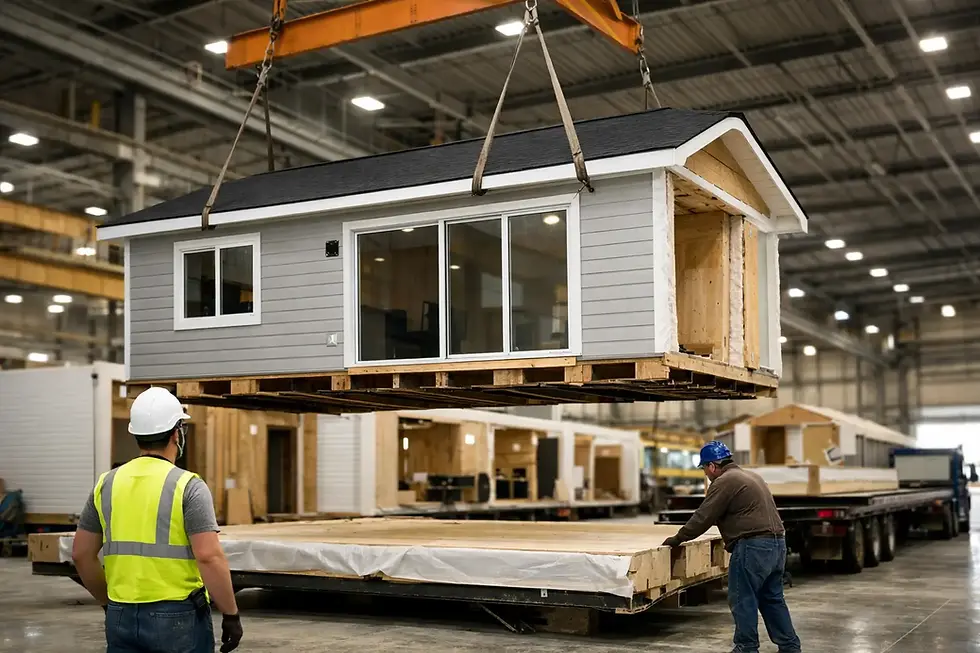
A modular home is built in sections in a factory, then transported to the property and assembled on a permanent foundation. It is not the same as a mobile home or an RV. A modern modular home is a permanent structure built to applicable building codes and, when properly specified, can offer the same everyday function as a house built fully on site.
A site-built home, sometimes called stick-built, is constructed entirely on the property. Materials arrive in stages, and the house is framed, enclosed, and finished outdoors over the course of the project.
That basic difference changes almost everything that follows. Factory-built construction relies on controlled production, repeatable systems, and scheduled delivery. Site-built construction relies more heavily on field conditions, subcontractor timing, and weather windows.
Where modular homes often have the advantage
The strongest case for modular construction is predictability. Because major portions of the home are built indoors, production is less exposed to rain, snow, wind, and moisture-related delays. That can matter in any region, but it matters even more where weather can interrupt site work and stretch schedules.
A factory setting also allows tighter process control. Materials are stored under cover. Trades work in a more consistent environment. Quality checks happen within a defined production system rather than across a jobsite that changes day by day. For buyers, that usually translates into fewer schedule surprises and a clearer sense of what is being delivered.
Cost control is another reason many buyers lean toward modular. That does not mean modular is always cheaper in every case. It means pricing is often more structured from the start. When the home design, specifications, transportation, and site requirements are properly defined up front, buyers can usually make decisions earlier and reduce the number of moving parts that drive cost escalation.
There is also the timeline. Site preparation and factory construction can often happen at the same time. Instead of waiting for framing to begin after all site work is complete, parts of the project progress in parallel. That can shorten the overall path to occupancy.
Where site-built homes may make more sense
Site-built homes still have real advantages, especially on highly customized projects or difficult lots. If the design is unusually complex, if access is restricted, or if the property has constraints that make module delivery difficult, site-built construction may be the more practical option.
Some buyers also prefer the flexibility of making adjustments as the build progresses. With a traditional build, field changes can be easier to accommodate, though that flexibility often comes with added cost and schedule impact. If you know you will want to revise layouts, materials, or finishes during construction, a site-built process may feel less rigid.
There is also a perception issue. Some buyers simply feel more comfortable with a house built entirely on their land because it aligns with what they have seen before. That familiarity can influence the decision, even when the performance outcome may be similar.
Cost: not just price, but exposure
When people compare modular homes vs site built, they often ask which is cheaper. The better question is which option gives you better control over total project cost.
A modular home can offer stronger price discipline because the product is defined earlier and manufactured within a controlled process. But your total budget still includes site prep, foundation, utility connections, transportation, crane setting if required, permits, and final finishing work. If those items are not clearly scoped, the budget can still drift.
A site-built home may start with a competitive estimate, but it often carries more exposure to labor shortages, weather delays, material changes, and coordination issues between trades. None of that guarantees overages, but it does create more variables.
The right way to compare costs is to look at the full delivered project, not just the shell or base house price. Buyers who focus only on the sticker price often miss the real question, which is how many unknowns remain after the contract is signed.
Quality and durability
This is where assumptions often get in the way. Some people still assume a modular home is lower quality because it is factory-built. That is outdated thinking.
A well-built modular home can be extremely durable. In fact, the controlled production environment can improve consistency because framing, assembly, and inspections happen within a structured process. Products that are CSA certified also give buyers an added level of confidence for financing, insurance, and compliance.
Site-built homes can also be excellent. Many are. But quality depends heavily on the builder, the crew, the supervision, the weather during construction, and the sequencing of work. Two site-built homes with the same plans can turn out very differently depending on execution.
So the real comparison is not factory versus field in the abstract. It is controlled manufacturing versus variable jobsite conditions.
Design flexibility and customization
This is one area where buyers sometimes overestimate the limits of modular construction. Modular does not mean one-size-fits-all. Floor plans, layouts, exterior finishes, rooflines, and interior selections can often be customized to suit the property and the buyer's needs.
That said, site-built homes may allow more freedom for very specific architectural ideas. If you want a highly unusual footprint, dramatic structural features, or changes deep into the process, site-built may give you more room to experiment.
For most buyers, though, the real question is not whether every idea is possible. It is whether the home can be customized enough to meet the way they actually live. In many cases, the answer with modular is yes.
Financing, appraisal, and resale
Financing matters more than many buyers expect. A permanent modular home that meets code and certification requirements is generally easier to finance and insure than products that fall outside those standards. That is why working with certified systems matters.
Appraisal and resale usually depend more on location, condition, design, and market demand than on whether the home was factory-built or site-built. Buyers sometimes worry that modular homes automatically lose value. That is not how the market typically works when the home is properly installed on a permanent foundation and comparable to surrounding housing.
The more relevant issue is documentation. Certified construction, clear specifications, and code compliance support smoother transactions from lending through resale.
What matters most on rural or remote land
For buyers building outside major urban areas, project logistics become a major factor. Labor availability, subcontractor coordination, weather delays, and material delivery can all put pressure on a site-built schedule. In those cases, modular construction can reduce part of the project risk by shifting much of the work to a factory before the home arrives.
That does not remove the need for proper site planning. Access for transport, foundation readiness, utility coordination, and local permitting still matter. But when a large portion of the house arrives substantially complete, there are simply fewer construction stages exposed to field disruption.
That practical advantage is one reason factory-built homes continue to appeal to landowners who want a faster, more controlled path to a finished home.
How to decide between modular homes vs site built
If your priority is schedule certainty, controlled production, and better cost visibility, modular is often the stronger choice. If your priority is extensive one-off design freedom or building on a site with delivery constraints, site-built may be worth the added complexity.
A good decision usually comes down to five questions. How customized does the home need to be. How much schedule risk can you tolerate. How exposed is the project to weather and labor delays. How important is early price definition. And how confident are you that your site can support module delivery and set.
For buyers who want a dependable process, certified construction, and a clearer path from order to occupancy, working with an experienced supplier matters as much as the building method itself. StratCan Building Systems helps buyers assess those variables early so the home, the site, and the delivery plan all line up before the project starts.
The smartest choice is usually the one that gives you the fewest surprises after work begins.