Prefab Home Delivery to Land Explained
- StratCan Building Systems
- 3 days ago
- 6 min read

If you are planning a new home on rural or privately owned property, prefab home delivery to land changes the part of the project that usually causes the most delays. Instead of building most of the structure outdoors through shifting weather, labor availability, and material staging issues, the home is produced in a controlled factory setting and then transported to your site for placement and finishing. That does not make the process effortless, but it does make it more predictable.
For buyers weighing timelines, financing, and site risk, that predictability matters. A factory-built home can shorten the build schedule, improve quality control, and reduce exposure to jobsite disruptions. The key is understanding what delivery includes, what still has to happen on your land, and how to plan the handoff between factory production and site completion.
What prefab home delivery to land actually means
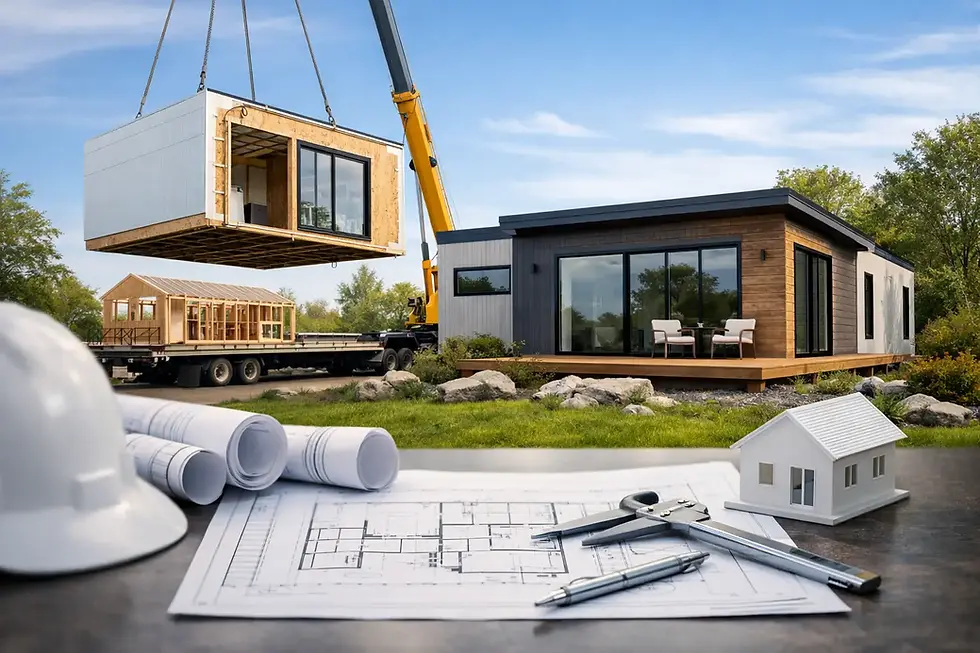
When people hear "delivered to your land," they sometimes assume the home arrives fully finished and ready to move into the same day. In practice, prefab home delivery to land usually means the home or home sections are manufactured off site, shipped by specialized transport, and set on a prepared foundation at the property. After that, final connections and finishing work are completed on site.
The exact scope depends on the home design and the supplier's process. A single-section home may involve a simpler set and hookup sequence. A larger multi-section home typically requires crane or placement coordination, sectional marriage work, roof and exterior completion details, utility connections, and inspections before occupancy.
That distinction matters because delivery is only one stage of the project. Good planning starts with the full sequence, not just the day the trucks arrive.
Why buyers choose factory-built delivery
The biggest advantage is schedule control. Factory production keeps framing, assembly, and many interior installations moving regardless of rain, wind, or cold conditions. That removes a major variable from the build calendar and helps buyers plan financing, land preparation, and move-in timing with more confidence.
Quality control is another reason buyers lean toward prefabrication. Homes built in a controlled facility follow repeatable production processes and are typically inspected to recognized standards. For many buyers, especially those wanting a clear path for lender and insurer review, certified factory-built construction is easier to evaluate than a loosely managed site build.
Cost control is part of the appeal as well, but this is where expectations need to stay realistic. Prefab does not automatically mean cheap. What it often means is better-defined pricing, fewer weather-related delays, less material waste, and a narrower range of jobsite surprises during the structural build.
What needs to be ready before delivery to your land
A factory-built home moves faster only if the site is ready when the home is ready. If access, foundation work, or permits are not in place, delivery can be delayed and the timeline advantage starts to disappear.
Site access and transportation route
The route to the property has to accommodate large transport equipment. Road width, turning radius, overhead lines, soft ground, steep grades, and seasonal conditions can all affect whether delivery is straightforward or requires extra planning. Rural lots are not automatically a problem, but they do need to be assessed early.
This is one of the most overlooked parts of prefab home delivery to land. A well-designed home still needs a realistic path to the site. If route constraints are identified late, the buyer may need changes to the delivery plan, the home configuration, or the timing.
Foundation and site work
Your foundation must be built to the approved design and ready to receive the home. The lot also needs grading, drainage planning, and enough clear working area for transport and set crews. Depending on the property, that may include excavation, fill, retaining measures, or temporary access improvements.
Utility planning should also happen before delivery. Water, sewer or septic, electrical service, and any other required connections need to be coordinated with the set schedule. If the home arrives before the site services are ready, progress slows immediately.
Permits, code, and local approvals
Even when the home is built in a factory, the project still has to meet local code requirements for placement, foundation, service connections, and occupancy. Buyers should expect coordination around permits, inspections, and jurisdictional requirements.
This is where working with a supplier that understands regional code expectations and certified building systems adds value. The smoother the approvals process, the less chance of costly pauses between delivery and completion.
How the delivery and set process usually works
Once the home is manufactured, transportation is scheduled based on site readiness and route conditions. The sections are delivered to the property and placed onto the foundation using the appropriate setting method. For some homes, that may involve direct placement equipment. For others, crane support may be required depending on the layout and site constraints.
After placement, crews complete structural tie-ins, weather sealing, and the connection points between sections. Interior finish work at the seam areas is then completed, followed by utility hookups, system testing, and any final exterior work required by the design.
The process is efficient, but it is not casual. Timing matters. Delivery crews, site contractors, utility trades, and inspection schedules need to line up closely enough that the home can move from transport to completion without sitting exposed or incomplete longer than necessary.
Common trade-offs buyers should understand
Factory-built delivery reduces some risks, but it introduces planning requirements of its own. Transportation logistics are the clearest example. A site-built home does not need to travel down your access road in one or more large sections. A prefab home does.
Customization is another area where buyers should ask detailed questions. Many prefab homes offer substantial flexibility in layout, finishes, and features, but not every design change is equally practical within factory production. The best approach is to decide early which options are essential and which are nice to have.
There is also a difference between reduced site time and reduced total project time. Factory production can accelerate the home build, but permits, foundation work, land development, and utility installation still follow their own schedules. If those parts lag, the overall project may not feel as fast as expected.
What to ask before you order
Before committing to a factory-built home, buyers should have clear answers on four points: what is included in the home package, what site work is excluded, what certifications apply, and what the estimated delivery and completion timeline looks like under normal conditions.
It is also smart to ask how pricing is structured. Predetermined pricing is valuable, but only when the scope is well defined. Buyers should understand which costs are tied to the factory-built home itself and which belong to excavation, foundation, service work, transportation conditions, and final site finishing.
If you are building on private land for the first time, do not treat delivery as a standalone purchase. Treat it as one part of a coordinated project. That mindset helps avoid the most common issue in prefab builds: a well-built home arriving at a site that is not fully ready.
Why certification and supplier discipline matter
Not all prefab offerings are equal. For most buyers, especially those who want fewer financing and insurance complications, certified construction is a practical advantage. It helps confirm that the home has been produced to recognized standards and supports a more straightforward review process by lenders, insurers, and local authorities.
Supplier discipline matters just as much. You want a partner that can speak clearly about manufacturing standards, delivery logistics, code compliance, timeline expectations, and the limits of the site. In a market where weather, transportation, and land conditions can create real pressure on a project, vague answers usually lead to expensive ones later.
For buyers in Newfoundland and Labrador, that local understanding can make a meaningful difference. StratCan Building Systems focuses on Canadian factory-built homes with a practical approach to code compliance, customization, and delivery planning that fits the realities of building on privately owned land.
A prefab home delivered to your land can be a faster, more controlled path to a new home, but only when the planning is as disciplined as the manufacturing. The best results come from lining up the home, the site, and the delivery schedule before the first section ever leaves the factory.