How Long Do Prefab Homes Take to Build?
- StratCan Building Systems
- 10 hours ago
- 5 min read

If you are comparing building methods, one of the first questions is straightforward: how long do prefab homes take? The short answer is usually a few months for manufacturing and several more weeks for site work and set-up, but the real answer depends on design decisions, permitting, site readiness, transportation, and who is managing the project. Prefab homes are often faster than fully site-built homes because a large portion of the work happens in a controlled factory setting, but faster does not mean instant.
For most buyers, the useful way to think about timeline is not one single number. It is a sequence of phases, each with its own risks and opportunities to stay on schedule. If you understand those phases early, you can make better decisions on land preparation, financing, and delivery planning.
How long do prefab homes take from order to move-in?
In many cases, a prefab home can move from signed order to delivery in roughly 3 to 6 months, with total time to move-in often landing around 4 to 8 months. Simpler models with standard finishes and a ready site can move faster. Larger custom homes, remote delivery locations, or projects waiting on permits and utility work can take longer.
That range is still generally favorable when compared with many traditional builds, especially in regions where weather, labor availability, and material coordination can slow site construction. Factory-built homes reduce some of that uncertainty because the core structure is produced indoors, under a controlled schedule, with repeatable quality checks and code-driven processes.
The phases that shape the prefab home timeline
A prefab project usually moves through five main stages: planning, approvals, factory production, site preparation, and delivery with final installation. Some of these happen one after another. Others can overlap if the project is organized well.
1. Design and quote approval
This phase can take a few days for a standard model or several weeks for a customized layout. The timeline depends on how quickly selections are made and whether the home needs design changes, structural adjustments, or upgraded finishes.
Buyers often add time here without realizing it. A project can stall when floor plans keep changing, pricing is reviewed multiple times, or the financing package is not yet lined up. Clear decisions early usually save more time than people expect.
2. Permits and financing
Permitting timelines vary by municipality and by the level of documentation required. Financing can also affect the schedule, particularly if the lender needs detailed plans, specifications, certifications, or appraisals before releasing funds.
For factory-built housing, certification matters. CSA-certified homes typically make financing, insurance, and code review more straightforward because the product already meets recognized standards. That does not remove every local approval, but it can reduce avoidable friction.
3. Factory production
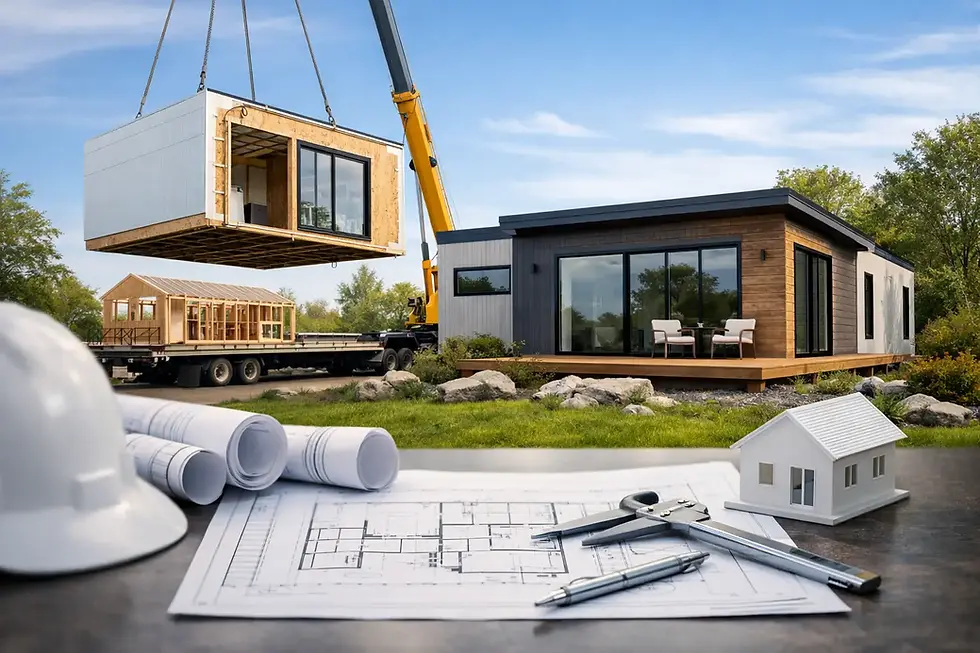
This is where prefab gains its speed advantage. Once approvals are in place and production is scheduled, the home can often be built in a matter of weeks rather than months. Because the work happens indoors, weather delays are limited, trades are coordinated in one location, and materials are staged in advance.
A typical production window might be 6 to 12 weeks, depending on the manufacturer’s backlog, the size of the home, and the level of customization. During busy seasons, the queue before production starts can be just as important as the build time itself.
4. Site preparation
While the home is being built, the land should be getting ready. This includes foundation work, grading, access planning, utility trenching, septic or sewer coordination, and any required driveway improvements for transport and crane access.
If the site is not ready when the home leaves the factory, the schedule can slip quickly. In practical terms, site work is often the phase that decides whether a prefab project feels fast or frustrating.
5. Delivery, set, and finish work
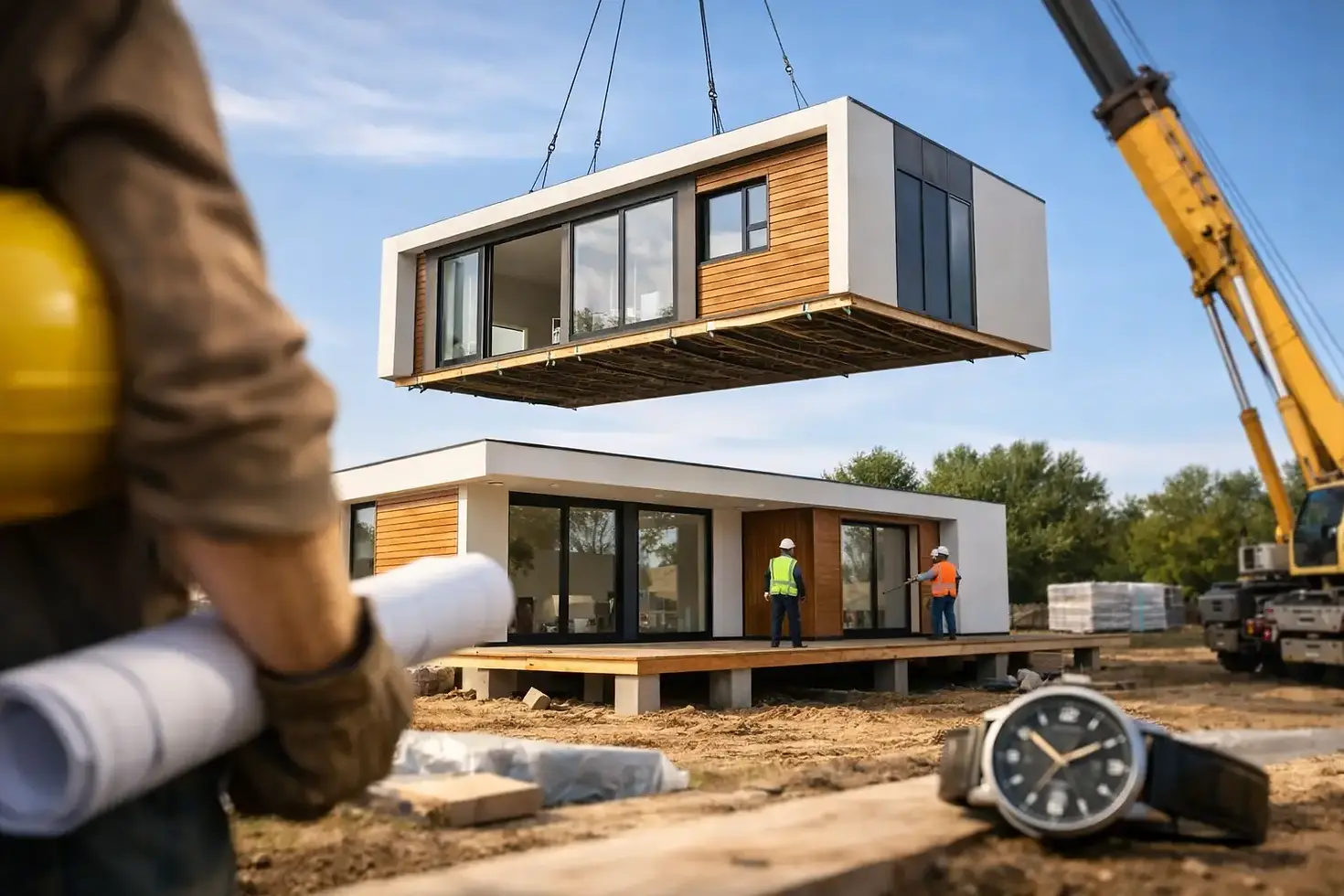
Once the modules or sections arrive, placement can happen quickly, sometimes in a day or two. That speed often surprises first-time buyers. What follows is the important final stage: joining sections, weatherproofing connection points, completing interior and exterior finish work, hooking up utilities, inspections, and occupancy approval.
This final stretch may take a few weeks, or longer if weather, inspections, or subcontractor scheduling become an issue. The home may be structurally in place very quickly, but move-in depends on all the finishing steps being completed properly.
What causes prefab home delays?
Prefab homes are faster because they reduce some common construction problems, not because they remove all of them. There are still variables that affect schedule.
The biggest one is customization. A standard model with established specifications usually moves faster than a highly modified plan. Every revision can affect engineering, pricing, material ordering, and production sequencing.
Permits are another major factor. Even when the home itself is factory-certified, local approvals for foundations, setbacks, site access, utilities, and occupancy still have to be secured. Delays here are not a prefab issue as much as a project management issue.
Transportation also matters more than many buyers expect. Delivering large home sections requires route planning, weather windows, and suitable road access. This is especially relevant in areas where rural access, ferry logistics, or seasonal conditions affect shipping schedules.
Then there is the site itself. Rock excavation, drainage problems, foundation delays, and utility coordination can all push back delivery or final completion. A prefab home can be built quickly, but it still needs a properly prepared site.
Why prefab is usually faster than site-built construction
The main advantage is parallel progress. With traditional construction, the structure goes up on site while the project is exposed to weather, labor scheduling gaps, and staged material deliveries. With prefab, the home is built in a factory while site work can happen at the same time.
That overlap cuts weeks out of many projects. It also improves predictability. Factory settings support controlled assembly, standardized inspections, and tighter scheduling across trades. For buyers, that usually means fewer surprises and a clearer path from order to occupancy.
It is also worth noting that speed is not the only benefit. Controlled production can support better quality consistency, less weather-related material exposure, and more dependable pricing. In many projects, those advantages matter just as much as the calendar.
How to keep your prefab home project on schedule
If your goal is a faster project, the best move is to treat prefab as a coordinated process, not just a product order. The buyers who stay on schedule tend to do a few things well.
They secure land details early, confirm zoning and access, and make design decisions before production slots are booked. They also line up financing and site contractors early instead of waiting for the factory build to begin.
It helps to ask direct questions before signing: What is the current production lead time? What approvals are still needed locally? What site work must be complete before delivery? Who is responsible for each stage? Clear responsibility prevents the kind of delays that come from assumptions.
Working with an experienced supplier also matters. A partner that understands certifications, delivery logistics, code requirements, and regional conditions can identify schedule risks early. That is one reason buyers working with StratCan Building Systems often focus not just on the home itself, but on the full path to delivery and installation.
The realistic answer buyers should use
So, how long do prefab homes take in real-world conditions? For many projects, expect around 4 to 8 months from order to move-in, with some projects landing outside that range depending on customization, approvals, factory queue, and site readiness.
That may not be overnight, but it is often materially faster and more predictable than building entirely on site. More importantly, it gives buyers a process that can be planned with greater confidence.
If you are starting a prefab home project, focus less on the advertised fastest-case timeline and more on whether the supplier can clearly explain each phase, each responsibility, and each likely risk. That is usually the difference between a project that moves efficiently and one that spends months waiting on the details.