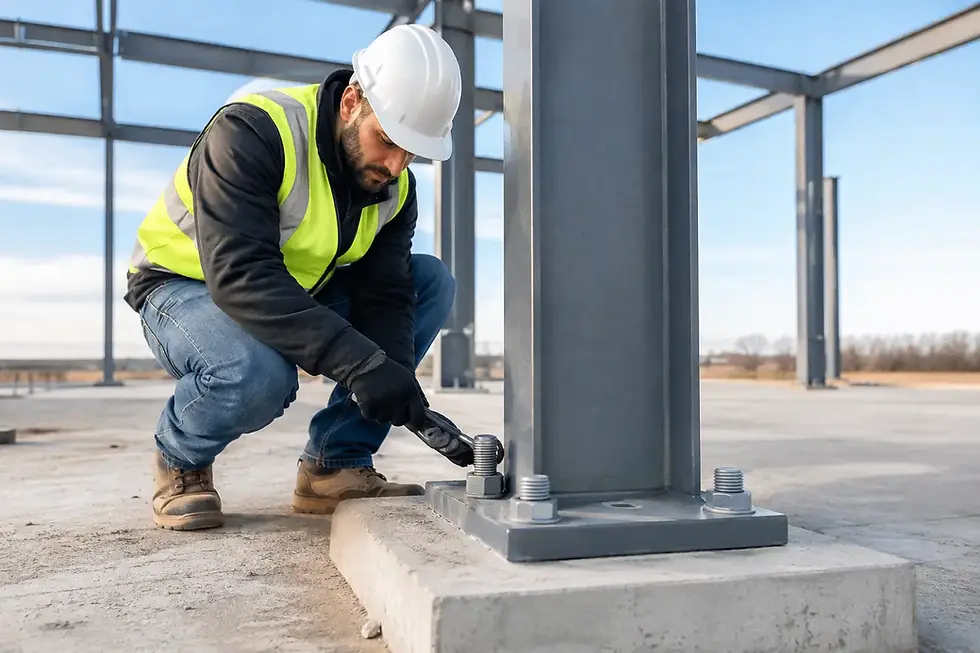
A steel building can arrive engineered, manufactured, and ready for assembly, but if the slab or footing is off by even a small margin, the whole project slows down. Steel building foundation requirements are not just a concrete question. They affect building fit, anchor bolt placement, drainage, long-term performance, and whether installation stays on schedule.
For owners planning a warehouse, farm building, equipment storage space, or commercial facility, the foundation is where predictable results begin. A pre-engineered steel building depends on exact loads, exact dimensions, and exact connection points. That means the foundation has to match the building design, the site conditions, and the local code requirements.
Why steel building foundation requirements are so specific
A conventional wood-framed structure can sometimes tolerate small field adjustments. A pre-engineered steel building is less forgiving. Its columns, base plates, anchor bolts, and framing geometry are designed as a complete system. If the foundation layout is wrong, the errors carry upward into the steel package and then into the roof and wall installation.
That is why steel building foundation requirements are tied directly to engineered building drawings. The foundation is not a generic slab poured to a rough footprint. It is a structural component designed to transfer building loads into the ground safely and consistently.
Those loads vary more than many buyers expect. Dead loads include the weight of the steel frame, roof system, and wall panels. Live loads may include stored materials, equipment, suspended systems, or occupancy use. Environmental loads can be the deciding factor, especially in regions where snow, wind, frost, and drainage conditions are serious design issues. The foundation has to respond to all of them.
The foundation type depends on the building and the site
There is no single foundation that fits every steel building. The right choice depends on building size, use, soil capacity, frost depth, water conditions, and whether the structure will support heavy interior traffic or equipment.
In many projects, a slab-on-grade foundation is used with thickened edges or isolated pier and footing support at the column lines. This can be a practical choice for storage, light commercial, and agricultural applications where floor use and equipment demands are straightforward. In other cases, separate footings, grade beams, or deeper foundation elements may be required because the structural loads are higher or the soil is less predictable.
A small storage building on stable ground is one thing. A wide-span industrial building with crane loads, vehicle traffic, or specialized equipment is another. The point is simple: the building system and the foundation system need to be engineered together, not treated as separate decisions.
Soil conditions matter more than most owners expect
The best engineered building package can still be compromised by poor soil preparation. Bearing capacity, settlement potential, organic content, moisture conditions, and frost susceptibility all affect foundation design. If the subgrade is weak or inconsistent, concrete thickness alone will not solve the problem.
This is where site investigation becomes valuable. Depending on the project, that may mean a geotechnical review, soil testing, or at minimum a qualified evaluation of existing ground conditions. Soft areas, fill of unknown quality, high groundwater, and poor drainage should be identified before the foundation design is finalized, not after excavation begins.
Key design factors behind a steel building foundation
Most buyers focus first on the building size. Engineers also have to account for how the building will behave once it is in service. That changes the foundation requirements quickly.
Column reactions are a major factor. Each steel column transfers a specific load into the footing or slab at a specific point. Those reactions can include uplift as well as downward bearing, especially in high-wind conditions. That is why anchor bolt design and footing size are not guessed in the field.
Frost protection is another major issue. In cold climates, foundations must extend below frost depth or use an approved frost-protected design approach. If this is overlooked, freeze-thaw movement can shift the structure, crack slabs, and affect door operation over time.
Drainage also deserves more attention than it usually gets. Water around the slab edge or under the building can lead to erosion, frost heave, slab movement, and interior moisture issues. Proper grading, base preparation, and runoff control are part of foundation performance, not optional extras.
Slab requirements are not the same as footing requirements
Owners often refer to the whole foundation as the slab, but the slab and the structural footing elements do different jobs. The slab provides the working floor and distributes floor loads. The footings or thickened bearing points support the steel frame itself.
That distinction matters when planning use. A building intended for light storage may need a different slab design than one used for forklifts, pallets, vehicle service, or heavy equipment. If floor loads are underestimated early, correcting the slab after construction is expensive and disruptive.
Precision is critical before the building arrives
Factory-built steel systems are produced to engineered dimensions. That is one reason they support faster and more predictable construction, but it also means the foundation must be accurate.
Anchor bolt placement is a common point of failure. If bolt patterns are misaligned, columns may not seat correctly on the base plates. Elevation errors can create frame alignment problems. Even small layout mistakes can delay erection, create field modifications, and increase labor costs.
For that reason, foundation drawings should be followed exactly, and final checks should happen before concrete placement and again before steel delivery. A disciplined process at this stage protects the schedule later.
Code compliance starts below grade
A steel building may be engineered for code compliance, but the project is not truly compliant unless the foundation is designed and built to the same standard. This usually means a licensed engineer prepares or reviews the foundation design based on the building reactions, site conditions, and applicable code requirements.
Permitting authorities may require sealed drawings for the foundation, especially for commercial, industrial, agricultural, or public-use structures. In some cases, inspections will also be needed for excavation, reinforcing, concrete placement, or anchor bolt verification.
That is one reason buyers benefit from working with a supplier that understands the full path from engineered building package to site-ready installation. The foundation cannot be treated as an afterthought if the goal is a smooth permit process and dependable delivery.
Common mistakes that create avoidable costs
Most foundation problems are not dramatic structural failures. They are preventable planning errors that affect schedule, fit, and long-term usability.
One common issue is pouring the foundation before final building drawings are approved. Another is assuming an older slab can support a new steel building without confirming dimensions, reinforcing, loads, and condition. Poor drainage planning is another frequent problem, particularly on rural or sloped sites where runoff patterns change during construction.
There is also the problem of designing only for the shell and not for the use. Overhead doors, interior equipment pads, plumbing penetrations, insulation details, and future floor loading all need to be considered early. A cheaper foundation at the start can become the more expensive option if it limits how the building performs later.
How to approach foundation planning the right way
The practical path is straightforward. Start with the intended use of the building, not just the footprint. Confirm the site conditions early. Use the engineered building reactions and drawings to guide foundation design. Then make sure the contractor building the foundation understands that this is a precision assembly project, not a rough pad pour.
For buyers in Newfoundland and Labrador, local climate conditions add another layer of importance. Snow, frost, wind exposure, and site drainage can all influence the engineering. That is where a dependable supply partner adds value by helping coordinate a building system that matches regional demands instead of relying on one-size-fits-all assumptions.
A pre-engineered steel building can save time and bring more cost certainty than many conventional builds, but only if the foundation is done with the same level of discipline as the structure above it. StratCan Building Systems works with buyers who want that process handled properly from the start.
Before you commit to delivery dates or erection plans, make sure the foundation is treated as part of the building system, not a separate task to sort out later. That one decision tends to make every step after it easier.