A building near the coast does not fail because it is made of steel. It fails when the design ignores salt, wind, moisture, and maintenance. That is the real answer behind the question, can steel buildings handle coastal weather. Yes, they can, but only when the building system is engineered for the environment it will face.
For property owners, contractors, and operators, that distinction matters. Coastal exposure is not a small upgrade to a standard building package. It changes decisions around framing, coatings, connections, fasteners, ventilation, and foundation detailing. If those decisions are made early and correctly, a steel building can perform very well in a marine setting.
Can steel buildings handle coastal weather in real conditions?
They can, and many do, but coastal performance depends on more than the base material. Steel has strong advantages in high-wind regions because it delivers predictable structural performance, clear engineering values, and long-span capability. That makes it a practical choice for commercial, industrial, agricultural, and storage buildings in exposed areas.
The challenge is corrosion, not basic strength. Coastal air carries salt. Salt attracts moisture and accelerates the breakdown of unprotected metal surfaces. Wind-driven rain can push moisture into weak points around roof edges, wall penetrations, door openings, and fastener locations. In colder climates, freeze-thaw cycles add another layer of stress.
So the better question is not whether steel can handle coastal weather. It is whether the building has been specified for coastal weather. A properly engineered prefabricated steel building can be an excellent fit. A lightly specified package with generic components may not be.
What coastal weather actually does to a building
Near the ocean, buildings deal with a combination of stressors rather than one single threat. High winds create uplift pressure on roofs and racking pressure on wall systems. Salt spray settles on exterior surfaces and works into scratches, cut edges, and exposed hardware. Persistent humidity slows drying and keeps condensation risks elevated.
This is why coastal design is detail-sensitive. A steel frame may be fully adequate structurally, but the building envelope and its exposed accessories often determine how well the system holds up over time. Roof panels, wall panels, trims, sealants, gutters, fasteners, and doors all need to be considered as part of the same performance system.
That is also where prefabricated steel systems have a practical advantage. When components are manufactured in controlled conditions and engineered as a coordinated package, quality tends to be more consistent than piecing together mixed products on site. That does not remove the need for proper installation, but it reduces variables.
The design features that matter most
If you are evaluating whether a steel building belongs on a coastal property, start with the engineering criteria. Wind loads should reflect the actual site exposure, building use, dimensions, and local code requirements. Buildings in open or exposed coastal areas can experience very different pressures than buildings in sheltered inland conditions.
Next, look closely at corrosion protection. Galvanized secondary members, coated cladding systems, and marine-appropriate fasteners are not minor add-ons. They are part of the building's long-term durability strategy. The right coating system depends on proximity to saltwater, expected exposure, and how often the building can be cleaned and maintained.
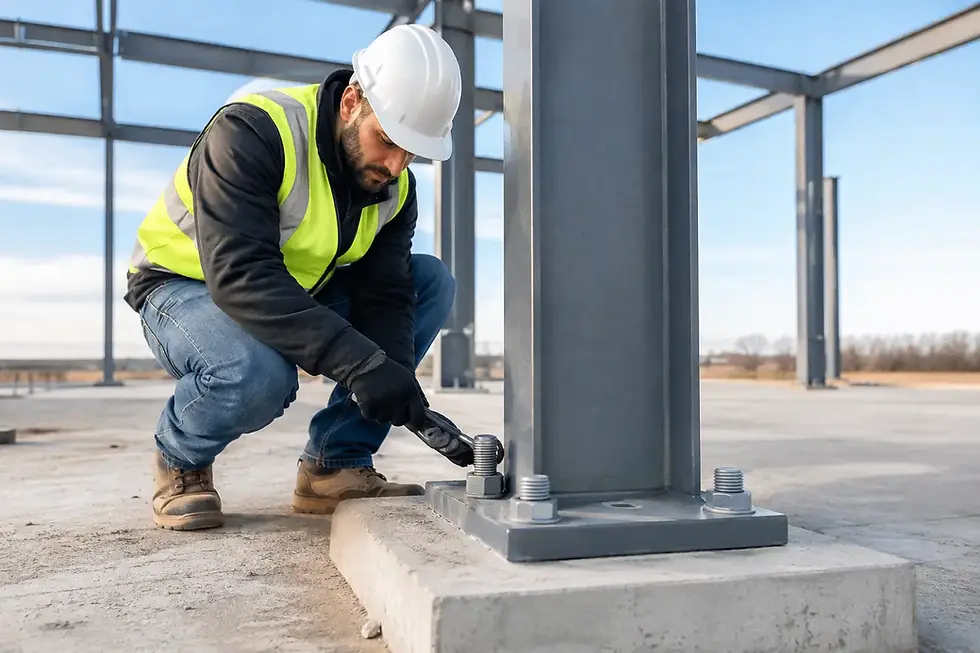
Connections matter as much as panels. If the primary frame is protected but fasteners, base conditions, or accessories are not, corrosion can begin at those vulnerable points first. This is one reason certified systems are valuable. They help ensure the components are selected to work together rather than assembled as a patchwork.
Ventilation is another factor that often gets overlooked. Coastal air and changing temperatures can create interior condensation, especially in storage, agricultural, and light industrial buildings. If warm moist air meets a cool steel surface, moisture forms. Over time, that can affect both the building and what is stored inside it. Proper insulation, vapor control, and airflow planning are just as important as exterior weather resistance.
Wind resistance is one of steel's strongest advantages
Where coastal weather includes strong gusts, steel performs well because it can be engineered with precision. Pre-engineered steel buildings are designed around calculated loads, not rough assumptions. That helps owners understand what the system is built to resist and gives contractors a more defined path during installation.
This matters for roof uplift, door openings, and clear-span interiors. Larger openings can create weak points in poorly designed buildings, especially when wind pressures increase around eave lines and end walls. With steel, those conditions can be addressed directly in the structural design.
That does not mean every steel building is automatically coastal-ready. It means steel gives engineers a dependable structural platform. The final result still depends on the right design criteria, the right components, and correct assembly in the field.
Corrosion is manageable, but never optional
The biggest misconception about steel in marine environments is that it either rusts immediately or is somehow immune if painted. Neither is true. Corrosion is manageable when expected and planned for. It becomes expensive when ignored.
A coastal steel building should be specified with exposure in mind. That may include upgraded coatings, better panel finishes, corrosion-resistant fasteners, and design details that shed water instead of trapping it. Cut edges, roof transitions, and areas where debris can collect deserve extra attention because trapped moisture speeds up deterioration.
Maintenance also plays a role. Even a well-finished building benefits from periodic washing, inspection of sealants, and review of roof and wall penetrations. This is especially true if the site is very close to open saltwater or exposed to regular spray. The goal is not constant repair. The goal is preventing small issues from turning into coating failure or panel damage.
Why factory-built systems often make more sense near the coast
Coastal projects leave less room for improvisation. A factory-built pre-engineered steel system helps reduce that risk because the major components are produced in controlled conditions, according to engineered drawings and defined specifications. That supports consistency in fit, finish, and structural performance.
For buyers, the practical benefit is predictability. You have clearer information on spans, loads, certification, and component selection before the building arrives on site. That is especially useful when timelines are tight, logistics are complicated, or the project needs to align with permitting and code review.
A supplier with regional experience can also help identify where a standard package needs adjustment. In a place like Newfoundland and Labrador, that may mean considering not only salt exposure but also snow loads, wind, moisture, and site access. StratCan Building Systems focuses on certified steel building packages designed for real local conditions rather than generic assumptions.
It depends on the use of the building
A coastal equipment shed, a municipal works building, a workshop, and a recreation facility do not all face the same risks. Interior humidity, frequency of door openings, heating patterns, and stored materials all affect how the building should be detailed.
For example, a cold storage-style building with limited heating may have different condensation behavior than a heated service building with frequent vehicle traffic. An agricultural building may need stronger moisture management from the inside, while a commercial building may place more emphasis on envelope appearance and long-term finish retention.
This is why building selection should start with use case, not just footprint. The same coastal site can require different wall assemblies, insulation packages, and accessory choices depending on what happens inside the structure every day.
What buyers should ask before ordering
The most useful question is not simply, "Will this work near the coast?" Ask how the building has been engineered for wind exposure, what corrosion protection is included, what fasteners and trims are specified, and how condensation will be controlled. Ask whether the system is certified and whether the components are intended to perform together.
You should also ask about lead times, delivery coordination, and installation requirements. A strong building package can still underperform if site preparation is poor or the erection process cuts corners. Coastal conditions reward disciplined planning.
Price matters, but comparing numbers without comparing specifications usually leads to false savings. A lower initial quote may leave out the very upgrades that make the building suitable for a marine environment.
Steel can be a very strong choice for coastal properties when the building is designed as a system, not treated as a commodity. If your site faces salt air, high winds, and constant moisture, the right path is straightforward: choose a certified package, engineer it for the actual exposure, and make sure every detail supports the environment it will face. That approach gives you a building that is not only fast to deliver, but built to hold up where performance matters most.