Updated: Jul 6
A building does not get judged on a calm day. It gets judged when wind pushes on the walls, lifts at the roof edges, and tests every connection from the frame to the foundation. That is why so many buyers ask, can steel buildings handle wind? The short answer is yes, when the building is properly engineered, manufactured, and anchored for the site. The longer answer matters more, because wind performance depends on design choices, code requirements, and installation quality.
Can Steel Buildings Handle Wind in Real Conditions?
Steel buildings are widely used for warehouses, equipment storage, industrial facilities, agricultural buildings, and recreational spaces. They can be engineered to perform under demanding wind conditions. Steel has a high strength-to-weight ratio, which allows the structure to resist lateral forces without relying on bulky framing. However, that strength alone is not the full story.
Wind resistance comes from the complete building system. The rigid frames, secondary members, roof and wall panels, bracing, fasteners, and anchors all work together to transfer loads safely to the foundation. If one part is undersized or poorly installed, the overall performance is affected. A steel building is not wind-resistant simply because it is made of steel. It is wind-resistant because it is engineered as a system.
This is where pre-engineered steel buildings have a practical advantage. When the design, detailing, and manufacturing are coordinated in a controlled environment, the structure is built around known loads and defined tolerances. That reduces guesswork and helps support code compliance from the start.
What Actually Determines Wind Resistance?
When buyers ask whether a steel building can handle wind, they are usually asking a more specific question: how much wind can this particular building handle on this particular site? The answer depends on several factors.
Site Exposure Matters
A building in an open rural area will experience wind differently than one surrounded by other structures or trees. Open terrain can increase wind exposure, and coastal or elevated locations may create additional pressure and uplift concerns. In practical terms, the same building size may need different engineering depending on where it will be installed.
Building Dimensions Change the Load Path
Width, height, eave height, roof slope, and door openings all affect how wind forces move through the structure. A taller building with large open bays may need a different framing approach than a lower-profile storage building. Large overhead doors also require careful attention, since openings can become vulnerable points under high wind pressure.
Roof Shape and Edge Conditions Are Important
Wind does not push evenly across a building. Roof corners, edges, and overhang areas often see higher suction and uplift forces. That is why roof geometry, panel attachment, and edge detailing matter so much. A building that looks simple from the outside may still require very specific engineering around corners and roof-to-wall transitions.
Foundation and Anchorage Are Part of the Wind Design
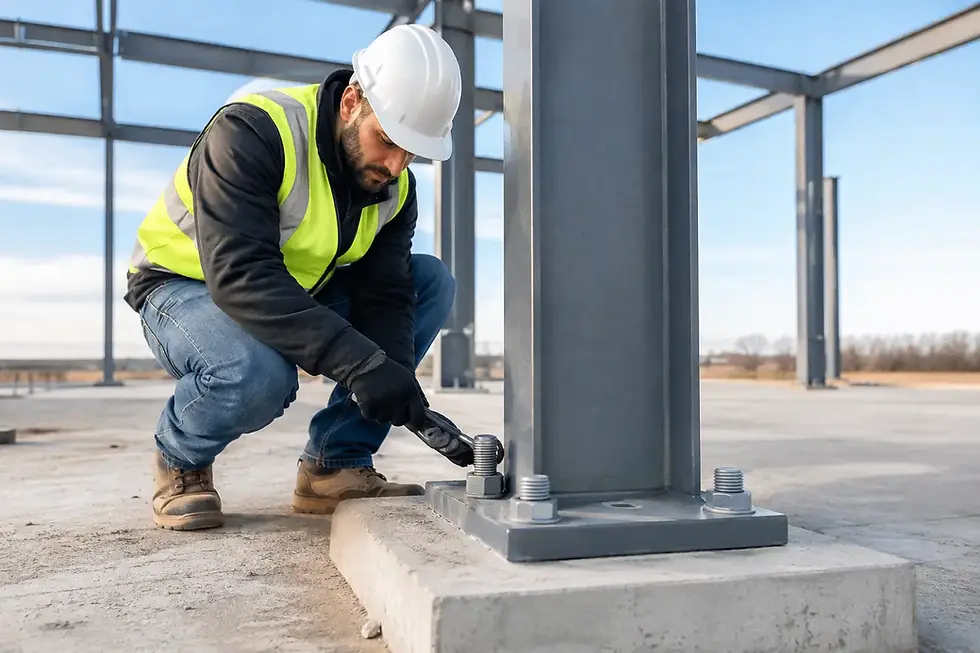
Even a strong frame can fail if it is not properly connected to the foundation. Wind loads must transfer into the slab, piers, or other foundation systems through correctly designed anchor bolts and base details. This is one of the most overlooked parts of wind performance. Buyers often focus on the steel package, but the foundation design and installation are just as critical.
Why Steel Performs Well Under Wind Load
Steel is predictable. That is one of its biggest advantages in structural design. Engineers know how it behaves under load, how connections can be detailed, and how to design members for bending, uplift, and lateral resistance. That level of predictability supports accurate calculations and code-based design.
Another benefit is consistency. Factory-produced steel components are manufactured to defined specifications, which helps reduce variation compared with materials that may shrink, warp, or absorb moisture over time. In demanding weather regions, that consistency supports long-term structural reliability.
Steel framing also allows for clear-span and wide-span configurations without excessive interior supports. For commercial, industrial, and agricultural users, that means usable interior space without giving up structural performance. Wider buildings still need proper engineering, of course, but steel makes those spans practical.
Can Steel Buildings Handle Wind Better Than Other Options?
There is no one-size-fits-all answer, because building performance depends on design quality more than marketing claims. A poorly designed steel building can underperform, just as a well-designed conventional structure can perform well. The better question is whether steel is a strong choice for buyers who need predictable engineering, repeatable manufacturing quality, and site-specific wind design. In many cases, the answer is yes.
For buyers focused on code compliance and schedule control, steel buildings offer a practical path. Pre-engineered systems are designed around stated loading criteria, fabricated in controlled conditions, and delivered as coordinated packages. That can reduce field adjustments and support a more disciplined project timeline.
The trade-off is that steel buildings are only as good as the engineering inputs and installation practices behind them. If a buyer chooses a system without clear certifications, stamped engineering, or proper load design for the site, the material itself will not make up the difference.
The Role of Codes, Certification, and Stamped Engineering
Wind resistance should never be treated as a rough estimate. It should be based on applicable building code requirements and site conditions. That means the design needs to reflect the governing standards for wind load, exposure category, occupancy, and structural use.
For buyers, this is where certified steel building systems matter. A building package should be engineered for the intended location and use, not pulled from a generic standard plan without adjustment. Documentation matters. So do drawings, calculations, and the ability to show that the building has been designed to meet the required criteria.
In regions with challenging weather, local knowledge adds real value. A supplier that understands regional conditions, logistics, and code expectations can help buyers avoid costly assumptions early in the process. StratCan Building Systems focuses on Canadian factory-built steel building systems engineered for local climatic demands, which is exactly the kind of discipline buyers should look for when wind performance is part of the decision.
Common Weak Points When Wind Becomes a Problem
Wind failures are rarely caused by one dramatic issue. More often, they come from smaller weaknesses that were ignored during design or installation.
One common issue is inadequate anchorage. If base connections are not designed and installed correctly, uplift and lateral forces can compromise the entire structure. Another is underdesigned cladding attachment. Roof and wall panels need fastening patterns and attachment details that match the wind loads, especially at corners and edges.
Large openings can also create problems when they are not properly accounted for. Overhead doors, bifold doors, and open bays change how pressure acts on the building envelope. If internal pressure increases during a wind event, the loads on the roof and walls can rise significantly.
Installation quality is another major factor. A well-engineered building still depends on proper assembly, alignment, bolt tension, panel fastening, and foundation interface. Wind resistance is not only designed on paper. It is built in the field.
What Buyers Should Ask Before Ordering
If wind performance is a priority, the right questions should come early. Ask what design wind loads the building is engineered for. Ask whether the engineering is site-specific. Ask how the anchorage and foundation requirements are addressed. Ask whether door systems, openings, and accessories are included in the load path design.
It is also worth asking how the building is manufactured and documented. Controlled production, certified materials, and clear engineering packages help reduce uncertainty. For commercial and rural property owners alike, predictable performance starts with clear specifications, not assumptions.
Price should be considered in that context. A lower initial quote may leave out engineering detail, certifications, or design features that matter in high-wind conditions. The better value usually comes from a building system that is correctly designed from the start and less likely to require costly changes later.
The Practical Answer
So, can steel buildings handle wind? Yes, they can, and they often do so very well. But wind resistance is not a generic feature you can assume. It comes from proper engineering, code-compliant design, dependable manufacturing, and correct installation at the site.
For buyers planning a new building, the smart move is to treat wind design as a core requirement, not a checkbox. A well-designed steel building should give you more than interior space and fast delivery. It should give you confidence when the weather stops cooperating.
Conclusion
In conclusion, understanding the wind resistance of steel buildings is crucial for making informed decisions. Proper engineering, adherence to codes, and quality installation are key factors that determine how well a building can withstand wind. As we navigate through the complexities of construction, let’s prioritize these elements to ensure our structures stand strong against the elements.
By focusing on these aspects, we can build not just structures, but also confidence in their performance. If you have further questions or need assistance, feel free to reach out. Your project deserves the best, and we’re here to help you achieve it.
---wix---