7 Top Benefits of Prefab Homes
- StratCan Building Systems
- 6 days ago
- 6 min read

A build that drags on for months costs more than patience. It can affect financing, add labor uncertainty, expose materials to weather, and create change orders that push the budget past the original plan. That is why the top benefits of prefab homes matter to buyers who want a more controlled path to ownership.
Prefab homes are not a shortcut around quality. When supplied through the right manufacturing and project process, they are a more disciplined way to build. For property owners, families, and landowners planning a new home, that discipline often translates into shorter timelines, better cost predictability, and fewer site-related variables.
Why prefab homes appeal to practical buyers
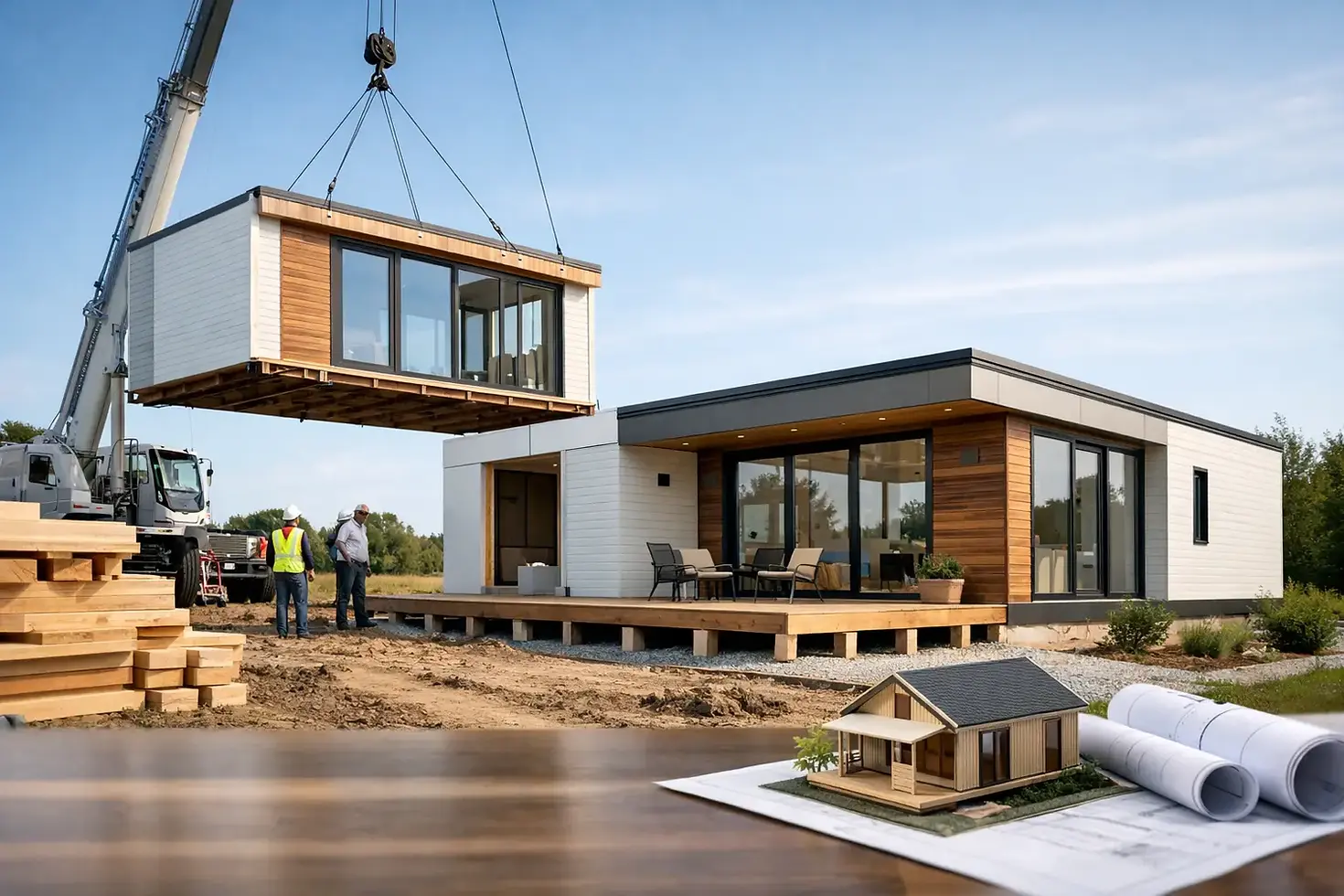
The strongest case for prefab housing is simple. Much of the home is built in a controlled factory environment rather than assembled piece by piece on an open job site. That changes how the schedule is managed, how quality is monitored, and how materials are protected during construction.
It does not mean every project is identical. Buyers can still choose layouts, finishes, and design options. The difference is that customization happens within a structured production system, which tends to reduce the risk that comes with traditional site-built construction.
1. Faster build timelines
For many buyers, speed is the first item that gets attention. It should be. A prefab home can move through production while site preparation is happening at the same time. Instead of waiting for every stage to happen in sequence on the land itself, key parts of the project run in parallel.
That matters in regions where weather can delay framing, material storage, and labor availability. Factory production keeps the home moving through a schedule that is less exposed to rain, wind, and cold. Once the home is ready, delivery and installation follow a much tighter process than a full build from scratch on site.
Faster does not mean rushed. It means more of the work is completed under a planned production schedule, with repeatable methods and clearer coordination.
2. Better cost control from the start
One of the top benefits of prefab homes is cost predictability. In traditional construction, budget overruns often come from site delays, labor swings, weather damage, material waste, and mid-project revisions. A factory-built approach reduces several of those pressure points.
Because the home is produced in a controlled setting, material use is more consistent and labor is scheduled more efficiently. Buyers also tend to get clearer pricing earlier in the process, which makes it easier to plan land development, utility hookups, and financing.
This does not mean prefab is always the cheapest option on paper. Site work, transportation, craning, foundations, and local installation still affect the final number. But the overall process usually offers fewer unpredictable cost events, and that can be just as valuable as a low initial quote.
3. Consistent quality in a controlled environment
A factory setting changes the quality conversation. Crews work indoors, tools and materials are organized, and production follows documented standards. That environment supports better consistency than open-site construction, where changing weather and shifting trades can affect workmanship.
Quality control is also easier to track when the build follows a defined process. Inspections happen at set stages, and the same systems are used repeatedly rather than improvised on a job site. For buyers, that usually means better fit and finish, better material protection during construction, and fewer issues caused by exposure before the home is enclosed.
This is especially important in climates where moisture and temperature swings can affect materials before a site-built home is dried in. Factory production reduces that exposure significantly.
4. Certification and code compliance support
For many buyers, certification is not just a technical detail. It affects financing, insurance, resale confidence, and overall peace of mind. A CSA-certified factory-built home is produced to recognized standards and designed to meet applicable building code requirements.
That level of compliance matters when you are making a major purchase and want fewer approval obstacles. Lenders and insurers generally respond better to homes that come through an established, certified process rather than an unclear or inconsistent build path.
Code compliance still depends on the full project, including foundation work, site preparation, utility connections, and local installation requirements. But starting with a certified building system gives the project a stronger base. It reduces uncertainty and helps buyers move forward with more confidence.
5. Real customization without starting from zero
Some buyers still assume prefab means limited choice. In practice, modern prefab homes can offer a strong range of layouts, elevations, finishes, and functional upgrades. You are not necessarily designing every detail from scratch, but you are not buying a fixed box either.
That balance works well for buyers who want a home that fits their land, budget, and lifestyle without taking on the cost and risk of a fully custom site build. You can often adjust floor plans, room configurations, kitchen designs, exterior finishes, and other features while keeping the project inside a proven production framework.
The trade-off is that extreme one-off design changes may be less practical than in a custom architectural build. For most buyers, that is a fair exchange. You get meaningful choice, but within a system designed to protect schedule, quality, and price.
6. Less construction risk on site
Every site adds variables. Ground conditions, access limitations, weather windows, subcontractor timing, and material handling can all disrupt a conventional build. Prefab shifts a large share of construction away from those variables and into a controlled manufacturing environment.
That does not eliminate site work. Foundations still need to be right. Delivery access must be planned properly. Utility connections and final finishing still require coordination. But the amount of work exposed to open-site risk is significantly reduced.
For rural properties or locations with tighter labor availability, this is a major advantage. The fewer moving parts you leave to field conditions, the easier it is to manage the project with confidence.
7. Strong long-term value for the right project
The best prefab homes are not just about getting built quickly. They are about getting built well enough that the home performs over time. Quality materials, consistent assembly, engineered systems, and certified production all support long-term durability.
That value shows up in several ways. Owners may see fewer construction defects tied to weather exposure during the build. They may also benefit from lower maintenance issues caused by rushed site framing or inconsistent installation practices. And when the home is properly specified for the climate and installed correctly, overall performance can be very strong.
As with any home, long-term value depends on design, materials, transport, installation, and maintenance. A prefab home is not automatically superior just because it is factory-built. The supplier, manufacturer, and project execution still matter. Buyers should look for clear standards, documented certification, and realistic guidance on what is included in the scope.
When prefab makes the most sense
Prefab is a strong fit for buyers who want a dependable process more than a drawn-out custom build experience. It works especially well when speed, budget control, and code-ready construction are priorities. Families building on private land, rural property owners, and buyers who want a clearer path to financing often find the model easier to manage.
It can also be a smart option where weather and logistics regularly complicate site construction. In those conditions, reducing the amount of on-site framing and assembly is not just convenient. It can protect the schedule and the investment.
That said, prefab is not ideal for every situation. Highly unusual building sites, difficult access, or ultra-custom design goals may call for a different approach. The right question is not whether prefab is better in every case. It is whether the process aligns with the priorities of your project.
Choosing a supplier matters as much as choosing a home
The benefits of prefab depend heavily on who is supplying the project. Buyers should ask about certification, manufacturing standards, engineering, delivery planning, code compliance, and what support is provided before and after the home arrives.
A dependable supplier should be able to explain the process clearly, define what is included, and help buyers understand site requirements early. That level of discipline is often what separates a smooth project from an expensive guessing game. Companies such as StratCan Building Systems focus on that structured approach because it gives buyers a clearer path from design selection to delivery.
If you are weighing your next home build, the best decision may come down to risk reduction. A prefab home will not remove every variable, but it can replace many of the most costly ones with a process that is faster, more controlled, and easier to plan around.


